
- EPW - G20 Summit
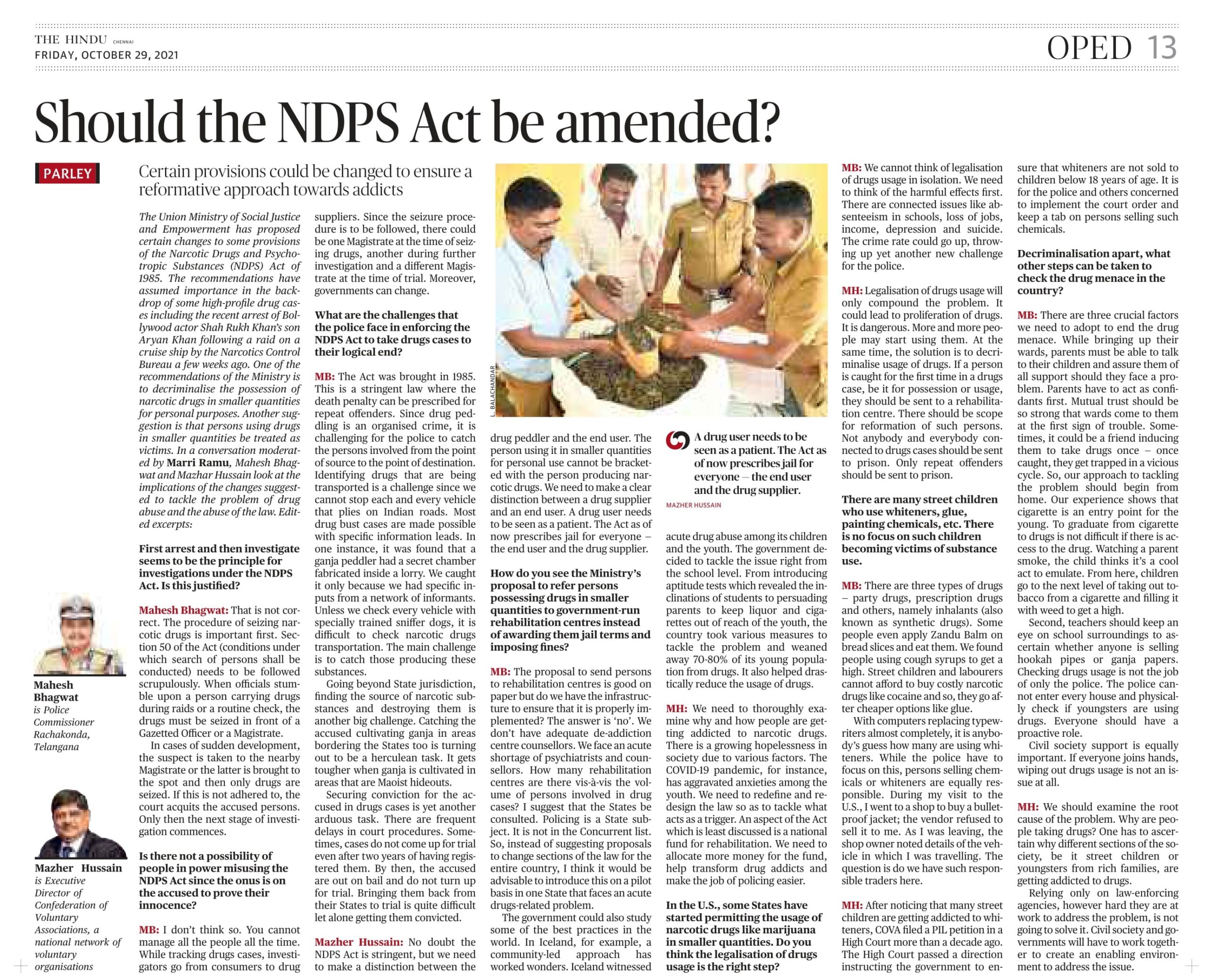
- THE HINDU- Amend NDPS Act
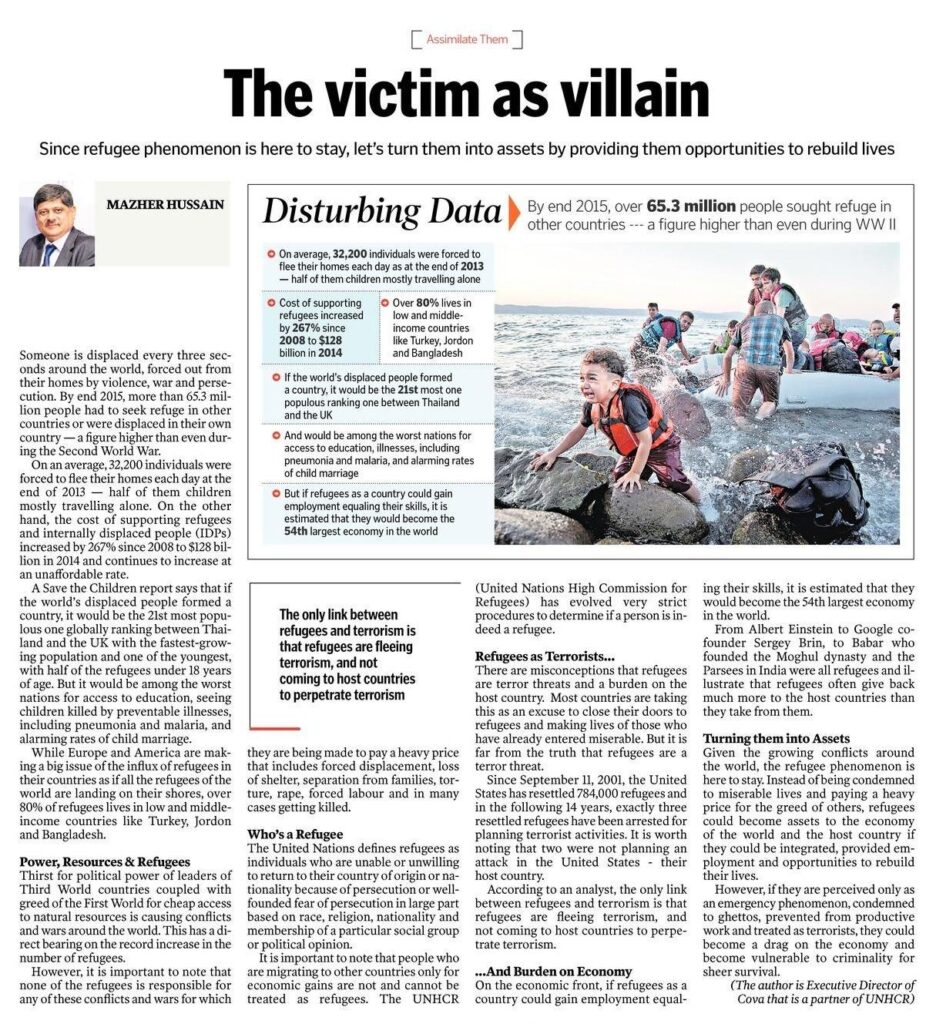
- Telangana Today- Refugee: Victim as Villian
- THE HINDU – On Babri
- The News - Peoples Foreign Policy
- THE WEEK - Corporate Governance
- The Hans India – G 20 Challenges
- EPW - Development Myth
- The Times of India -Hyderabad - Hate Politics
- Times of India - Divisive Politics Won’t Work in Old
- India Today- Muslims and Jails
- Muslims- In Policy
- Why do India and Pakistan Fight
- Hate Speech-Contexts and Consequences
- Indo-Pak CBMs and Conflicts 1998 -13
- Tandav @1000
- A Globe of Violence



A Globe of Religious and Ethnic Violence:
Causes of the Phenomenon and Pathways to Peace
Monograph by Mazher Hussain
Abstract
Across the world, conflicts rooted in religious, ethnic, racial and national identities are intensifying. From communal violence within societies to wars between nations, identity-based antagonisms are reshaping political and social dynamics. This article argues that the rise in such violence is not accidental but driven by a set of structural, ideological and technological forces. These include deglobalisation, political polarisation, divisive models of development, weaponisation of religion and nationalism, the construction of “others,” and the amplifying power of social media. The article analyses these interconnected challenges and proposes strategies to address them, including intra-faith reform initiatives, multi-faith social engagement, inclusive development approaches, digital counter-narratives and the rebuilding of compassionate societies through education and civic action. Sustainable peace requires not only political solutions but also the reconstruction of social values grounded in empathy, coexistence and shared human dignity.
Introduction
The twenty-first century is witnessing a disturbing resurgence of religious, ethnic and racial violence across the globe. Conflicts that once appeared limited to specific regions are increasingly visible across continents, ranging from communal tensions within societies to full-scale wars between states.
One of the most striking indicators of this trend is the steady decline in global peacefulness. The Global Peace Index that assesses conflict and safety across nations shows that peacefulness has declined every year since 2014 with 100 countries deteriorating over the last decade consistently.
The resurgence of identity-based conflict is not simply a product of isolated events. Rather, it is driven by broader structural and ideological shifts that are reshaping societies worldwide. These forces include the retreat from globalisation, increasing political polarisation, the strategic mobilisation of religious and national identities, and the unprecedented influence of digital media.
This article identifies eight major challenges that contribute to the rise of religious and ethnic violence globally. Understanding these drivers is essential for developing strategies that can prevent further escalation and promote sustainable peace.
1. Deglobalisation and the Reassertion of Identity
At the heart of the problem lies a shift away from the cooperative spirit that characterised the era of globalisation that was primarily an economic phenomenon. Globalisation did not only connect economies; it also fostered cultural interactions and accommodation of diverse identities leading to increased mobility, migration and communication among different communities within shared economic systems.
However, over the past two decades, the world has witnessed the emergence of a counter-trend that can be described as deglobalisation. Alongside economic shifts, societies are experiencing a process of social deglobalisation, characterised by the reassertion of distinct and exclusive identities based on religion, ethnicity, race, language, culture and nationality.
Identity-based claims increasingly revolve around the distribution of resources, political representation and cultural recognition. These claims are frequently framed in exclusionary terms, with groups seeking not only greater benefits for themselves but also restrictions on the claims of others.
Because identity conflicts are multidimensional, involving cultural, economic and political factors, they are often extremely difficult to resolve. The result is a growing fragmentation of societies along religious, racial and ethnic lines.
2. Political Polarisation
The resurgence of identities has created fertile ground for political polarisation. Political actors across the world increasingly mobilise voters by appealing to identity-based fears and grievances.
By framing political competition as a struggle between opposing identity groups, leaders can simplify complex socio-economic problems and rally supporters through emotionally charged narratives.
As a result, political polarisation that was once considered extreme or unethical has gradually moved into centre stage of mainstream politics and governments are being formed through political polarisation in many countries. In such contexts, exclusionary rhetoric and discriminatory policies may become normalised and even celebrated as expressions of national or cultural pride.
When governments themselves rely on polarisation as a political strategy, efforts to challenge these dynamics become particularly difficult, as they involve confronting entrenched power structures.
3. Development as a Source of Social Division
Development initiatives are often assumed to promote social cohesion and economic progress. However, in many cases, development programmes unintentionally reinforce social divisions.
When development projects focus exclusively on particular communities or identity groups, they can generate perceptions of exclusion among those who do not benefit from them. These perceptions may foster resentment, distrust and hostility between communities.
Such divisions can create fertile ground for political actors seeking to exploit social tensions. In this sense, development models that unintentionally segregate communities may contribute indirectly to polarisation and conflict.
Conversely, development programmes that deliberately include participants from diverse communities can help build trust and cooperation. People from different and antagonistic / conflicting communities can be brought together through development programs that they perceive to be beneficial and the resultant association and interactions with members of other communities could lead to mutual understanding and harmony. Inclusive development therefore has the potential to serve as a powerful instrument for social integration and conflict prevention.
4. The Weaponisation of Religion and Racism
Religion has historically served as a source of ethical guidance, compassion and social cohesion. Yet in contemporary politics it is increasingly being weaponised to mobilise support, justify exclusion and even legitimise violence. Racist ideologies and extreme forms of nationalism also reinforce this dynamic, creating rigid boundaries between communities that become powerful symbols of identity through which communities can be mobilised.
By portraying certain groups as threats to economic opportunities or cultural and religious values, political actors can generate fear and hostility that reinforce divisions within society. Subsequently such narratives are exploited to weaponise religion to instigate and legitimise violence for political interests.
Now unfortunately, most religions have been weaponised and causing mayhem in the world and need urgent corrections. But any attempt to criticise and correct any religion from outside could be counterproductive. One way would be the critique and corrections by its own religious leaders and other influencers but from within that religion- hence Intra Faith Initiatives.
Intra Faith Initiatives – A Case Study: Violence of ISIS and its glamorisation attracted youth from across the world including western countries. Sustained critique and expose of ISIS by priests, thought leaders and other influencers from within the Muslim world that this is not true Islam finally led to its discreditation, deglamorization and marginalisation. This demonstrates the possibility and potency of Intra Faith Initiatives.
So, these trends are not irreversible. History offers several examples of how communities have cleansed their practice of religions of abuse, resisted the politics of hatred and rebuilt social trust through Intra Faith Initiatives. All these need to be propagated properly to enable people to understand the possibility and potency of Intra Faith Initiatives so more and more people adopt this strategy to cleanse and deweaponise religions.
Multi Faith Celebrations: These days, most people don’t know much about their own religion but lots about other religions- that too mostly negative and received through digital media. This is becoming a major cause for spread of hatred and violence in all societies. A way out is gaining correct understanding about the beliefs and traditions of other faiths and communities. One option could be Multi Faith Celebrations.
All festivals across religions are celebrated with a reason and promote some values. It is seen that all religions promote many similar values and this realisation itself can promote affinity and some mutual acceptance. Further, two to six festivals of different religions come within four to six weeks- especially in India – and a new practice that is emerging is celebrating all festivals during a period on any one convenient day as Multi Faith Celebrations. Members from all communities are invited and Faith and Thought Leaders speak about the reasons for the festivals being celebrated, values they promote, their complementarity and commonalities. This often leads to discovery of shared ethical principles such as compassion, generosity and respect for human dignity. This reduces prevailing antagonisms and generates mutual respect and acceptance.
Another interesting dimension of Multi Faith Celebrations is common people across neighbourhoods and communities inviting their neighbours to their homes to celebrate their festivals together. This can ensure greater cohesion and harmony in the neighbourhood.
So, community initiatives such as multi-faith celebrations and interreligious dialogues can help build mutual understanding and reduce antagonism between communities.
5. The Weaponisation of Nationalism
Nationalism has historically served as a unifying force in the formation of modern states. However, in many parts of the world it is increasingly being used as a tool for exclusion. Weaponised forms of nationalism define national identity in narrow cultural, religious or ethnic terms, often marginalising minorities, migrants and other vulnerable groups. These narratives may portray such groups as threats to national unity or security or an unwarranted strain on the national resources when earlier, they were sought to be included and amalgamated. This phenomenon is engulfing many countries of the world and the number is increasing
In many cases, exclusionary nationalism is defining and justifying policies of discrimination, forced displacement or even violence against targeted communities. Countering such narratives requires the development of more inclusive visions of national identity that emphasise shared citizenship and democratic values rather than ethnic or religious homogeneity.
Transcending Borders: This could be a very tricky challenge as the current psyche across the globe from individuals to communities to countries is tending towards greed with the desire to appropriate maximum from the resources available. This could even result in depriving others of their rightful share. Further, there is also a tendency to think that one’s problems are because of others encroaching on one’s rightful entitlements when the real factors could be and generally are different, affect all and could be addressed through collaborations and cooperation.
There are initiatives using cyberspace to bring communities and countries together for mutual understanding and cooperation to address the common problems being faced by all together. This could indeed enable transcending of borders as concerned global citizens to collectively explore solutions for the economic, social, cultural, environmental and political problems being faced by all in different international contexts.
6. The Construction of the “Other”
Once identities are framed in antagonistic terms, societies often begin to categorise individuals or communities as “others.” When groups are perceived as fundamentally different or threatening, violence against them may appear justified. Acts ranging from discrimination and harassment to organised violence and warfare can then be rationalised as necessary for protecting one’s community or nation.
Reducing the construction of “others” requires challenging narratives that portray identities as inherently incompatible. Promotion of shared human values and recognising interdependence among communities are essential steps in this process.
7. Social Media and the Amplification of Polarisation
Digital media has transformed the way information spreads within societies. While social media platforms have expanded opportunities for communication, they have also created new avenues for the rapid dissemination of misinformation and hate speech.
Algorithms designed to maximise user engagement often amplify emotionally charged or sensational content. As a result, polarising narratives and conspiracy theories may spread more quickly than balanced or factual information, often escalating anger and fear.
At the same time there is a lot of positivity also in cyber space but its presentation, packaging and enticing power lacks any punch. Also, the formats for outreach are outdated and lack constant innovations required to be in currency. Example: there are many religious leaders, scholars, political leaders, academics and influencers etc. both alive and dead who have very powerful positive messages on a range of issues but delivered in messages and discourses spanning 15 minutes to one hour or more! In the days of Reels and Shots, the attention span has come down to around a minute- especially for youth. One strategy could be slicing one-to-two-minute key power points from these messages. Generally, each such message will have two to three key power points that can be identified, extracted and used to flood cyberspace.
More important, religions are being used as vehicles to spread hate and violence in service of polarisation for political gains. However, scriptures of every religion have scores of verses against hatred and violence and accepting and respecting others. Unfortunately, most people do not know these- either from their own religion or from other faiths. Creative ways to propagate all the positive messages in different religions as Reels and Shots etc, can certainly enable better understanding for all and save them from becoming ill informed agents to promote polarisation.
Strategic use of digital communication therefore has the potential to counter polarisation and promote more constructive public discourse.
8. Declining Compassion and the Need to Rebuild Ethical Foundations
Perhaps the most fundamental challenge underlying rising violence is the gradual erosion of empathy and compassion within societies.
Modern social systems often emphasise competition, economic success and individual achievement. While these values may drive economic growth, they can also weaken social bonds and reduce concern for the well-being of others.
Many cultures possess rich traditions that emphasise compassion and interconnectedness. Concepts such as Karuna and Ahimsa in India, Ubuntu in Africa and omoiyari in Japan highlight the importance of empathy and respect for others- including nature.
Unfortunately, in the prevailing times, most of these societies are also becoming less compassionate and the politics of polarisation is taking its toll by reducing compassion in societies and countries across the globe leading to ever increasing levels of inequity, injustice and violence.
The Global Peace Index started in 2007 and based on 23 parameters provides an objective measure to assess the growing conflicts across societies and between countries that could also be taken as an index of level of compassion in societies. It is important to note that the Global peace is at its lowest level in 2025 since the inception of the Index.
An unfortunate fact is that India, with its traditional civilisational values of Karuna and Ahimsa, has sunk to 115th Position in the Global Peace Rating in 2025 and South Africa with the value of Ubuntu is at 124th position. This shows the deterioration in the value systems of even those societies that had empathy and compassion as part of their civilisation and culture.
Reviving these ethical traditions may play a critical role in countering the politics of hatred. Education systems can contribute by incorporating programmes that encourage empathy, civic responsibility and social engagement among students.
Experiments in values-based education in several contexts have demonstrated that compassion and social responsibility can indeed be inculcated and cultivated through experiential learning.
Rebuilding Compassionate Societies
Addressing religious and ethnic violence requires more than political reforms. It also demands the reconstruction of social norms and values that emphasise coexistence and mutual care.
Community initiatives that celebrate acts of solidarity and courage can help reshape public attitudes. When individuals who protect members of other communities are recognised and honoured, they create powerful alternative narratives that challenge the glorification of violence.
Social media platforms are flooded with negative and polarising content, but the digital space also offers opportunities to amplify positive stories of solidarity and courage.
Consider the case of Deepak Kumar in Uttarakhand, who intervened to protect an elderly Muslim shopkeeper from harassment. When asked who he was, he replied “Mohammed Deepak,” symbolically combining identities to challenge communal hatred. The incident quickly went viral and inspired many others to speak up against violence.
Another example of resetting values in a society is from 1990’s from Hyderabad in India. The city witnessed communal riots for 4 months from October 1990 to January 1991 in which over 300 people were killed and violence and killing had become the prevailing norms. During this period of madness, some civil society organisations came across some cases where some Hindus had saved Muslin families and some Muslims saved Hindus. These noble acts were documented and shared with the media. After months of reporting mayhem and violence, media saw this as a new opportunity for coverage and started publishing interviews and photos of those who had saved members of another community.
After the riots, civil society organisations honoured them at a function as Saviours of Hyderabad and awarded Plaques celebrating their contributions to checking violence and promoting peace.
These people, mostly from deprived areas and slums soon acquired celebrity status and their acts of saving others, instead of violence and killing- became the new trend and value in the city. As a result, more and more people started coming forward to protect and save members of other communities under threat during subsequent communal disturbances- finally contributing to ensuring peace in the city for the past over 14 years!!
Such examples demonstrate that individual acts of courage can reshape public attitudes and create new social norms. Media and civil society organisations can also play a significant role in highlighting such stories and promoting values of empathy and cooperation.
Ultimately, lasting peace depends on creating social environments in which compassion and mutual respect are widely recognised as essential foundations of collective life.
Conclusion
The rise of religious and ethnic violence represents one of the most serious challenges confronting the contemporary world. It is the outcome of political choices, social narratives and institutional structures that reward division. The forces driving this phenomenon—deglobalisation, polarisation, identity politics, digital misinformation and declining empathy—are deeply interconnected.
The spread and level of insensitivity for others and hatred and violence now seems all pervasive- with conflicts within and between local communities all the way up to wars between countries. Add to that the emergence of megalomaniacs as leaders of more and more countries- and many with nuclear arsenal at their disposal. It will be a miracle if humanity survives for long.
Addressing these challenges requires coordinated efforts from governments, civil society organisations, educators, religious leaders and citizens. Policies promoting inclusive development, Intra Faith corrections, interfaith dialogue, responsible digital communication and values-based education can contribute to rebuilding social trust.
If humanity does not live up to this challenge- it will simply stop living. So, time to end the games of division and hate or The Game Ends for us all…..
Mazher Hussain is a peace activist and Executive Director of COVA Peace Network, Hyderabad, India.
He can be reached at: mazher@covanetwork.org ,
Whatsapp: +91 9394544244
Leave a Reply